
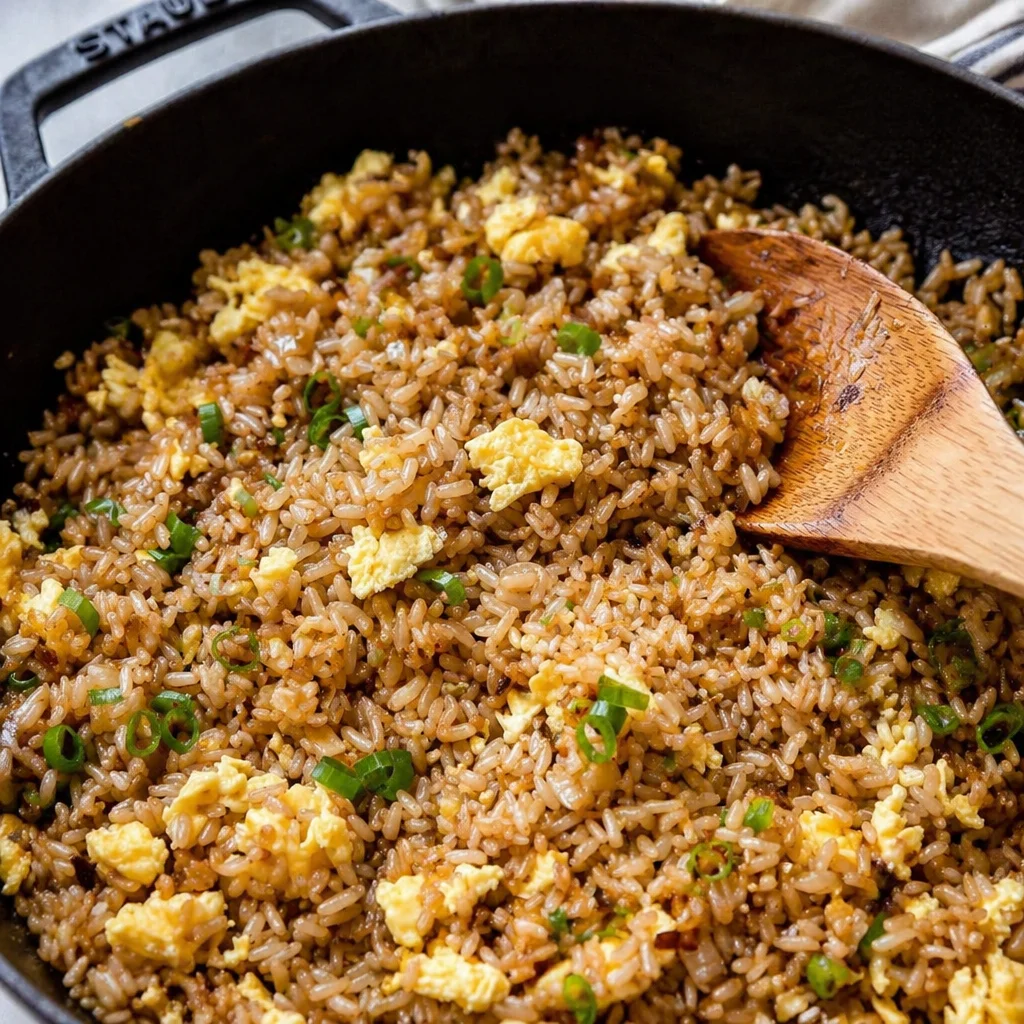
hibachi fried rice recipe is my go to move when I want that cozy restaurant vibe at home but I do not want to pay restaurant prices (or wait for a table). You know that moment when you are hungry, the fridge has random leftovers, and takeout sounds good but also kind of tiring? That is exactly when I make this. It is quick, it is flexible, and it makes the kitchen smell like garlic butter in the best way. Plus, it is one of those meals that makes people wander in and ask, “What are you cooking?”
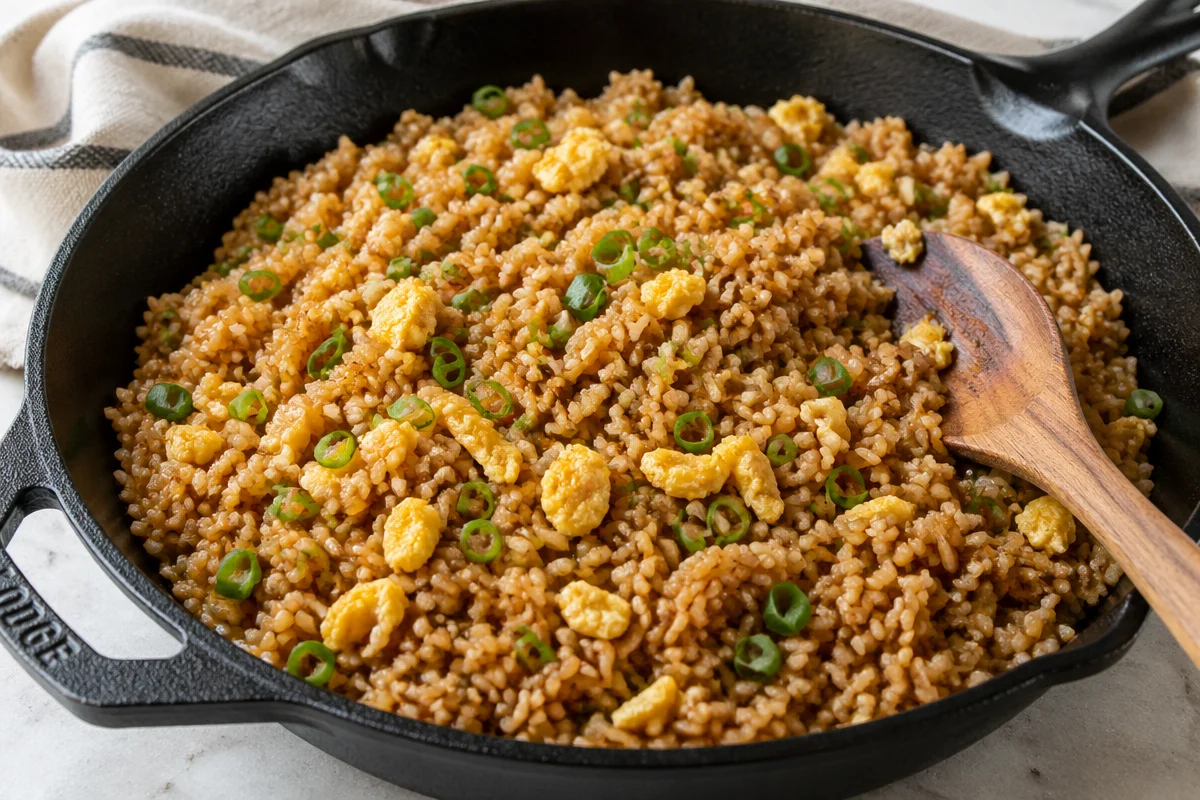
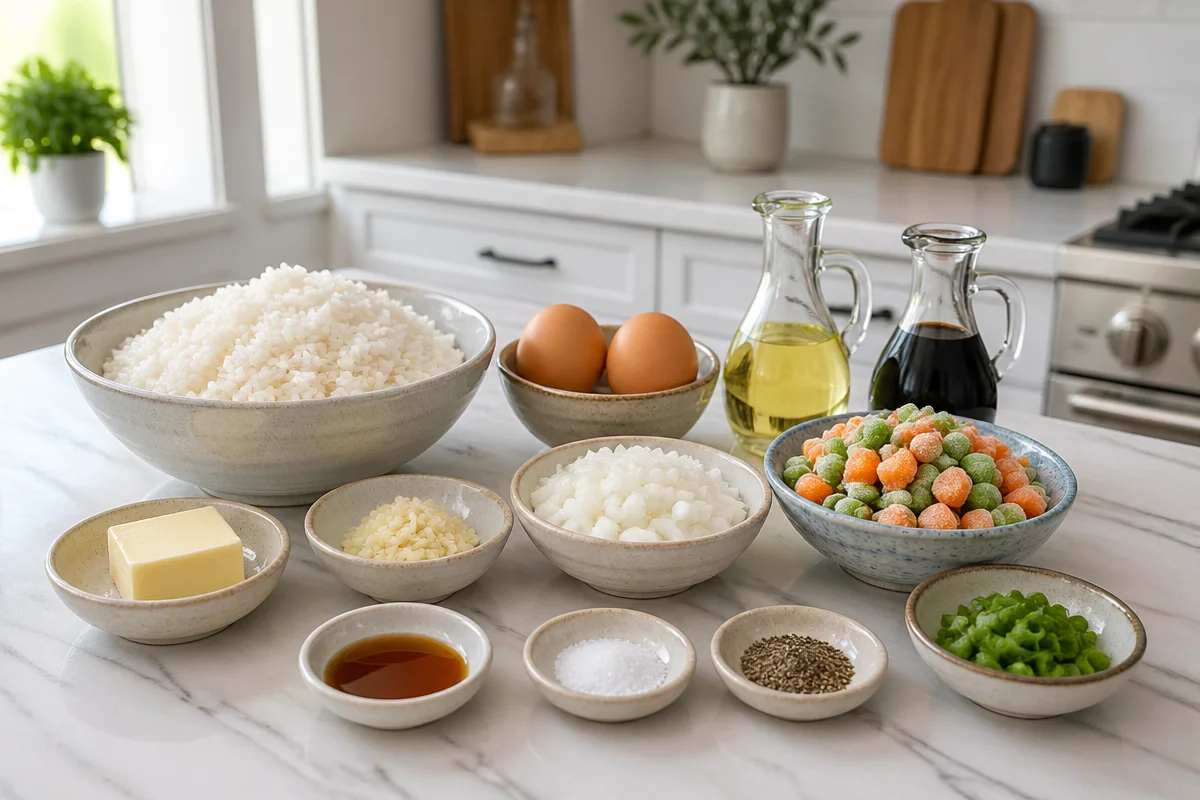
Ingredients for Hibachi Fried Rice
This is one of those recipes where the ingredients look simple, but the flavor ends up feeling like you worked way harder than you did. The big secret is using hot heat, cold rice, and a little butter with soy sauce. If you have a few optional items, even better.
Here is what I typically use for my **hibachi fried rice recipe** at home. This amount makes about 3 to 4 servings, depending on how hungry everyone is.
- Cooked rice: 4 cups, cold (day old is best)
- Eggs: 2 large
- Butter: 2 to 3 tablespoons (yes, it matters)
- Neutral oil: 1 tablespoon (like canola or avocado oil)
- Garlic: 2 cloves, minced
- Onion: 1 small, diced (optional but tasty)
- Frozen peas and carrots: 1 cup (or whatever mix you like)
- Soy sauce: 2 to 3 tablespoons, to taste
- Toasted sesame oil: 1 teaspoon (optional, but adds that “hibachi” smell)
- Salt and pepper: a pinch or two
- Green onions: sliced, for the top
If you want the classic steakhouse vibe, keep **yum yum sauce** in mind for serving, or a little extra soy sauce on the side. Also, if you have leftover chicken, shrimp, or steak, you can toss it in and call it dinner without extra effort.
Tips for Using Fresh Rice
Let us talk rice, because this is the part that can make or break the whole thing. I used to make fried rice with fresh, warm rice straight from the pot and then wonder why it turned into a soft, sticky pile. Turns out, that is normal. Warm rice holds steam, and steam is the enemy of crispy fried rice.
Day old rice is your best friend
If you can plan even a little bit, cook rice the day before and chill it. I spread it on a plate or a sheet pan so it cools fast, then cover it and pop it in the fridge. Cold rice dries out slightly, so it fries up instead of steaming.
If you only have fresh rice, do this quick fix
No shame, we have all been there. If you just made rice, spread it out in a thin layer on a tray, then put it in the fridge for 20 to 30 minutes. The goal is to cool it down and let some moisture escape. It is not as perfect as day old, but it works.
Also, if your rice is clumpy, gently break it up with clean hands before it hits the pan. It sounds fussy, but it saves you from fighting rice lumps later.
“I tried this at home and it finally tasted like the hibachi place we go to for birthdays. The butter and cold rice tip changed everything.”
Steps for Making Perfect Hibachi Fried Rice
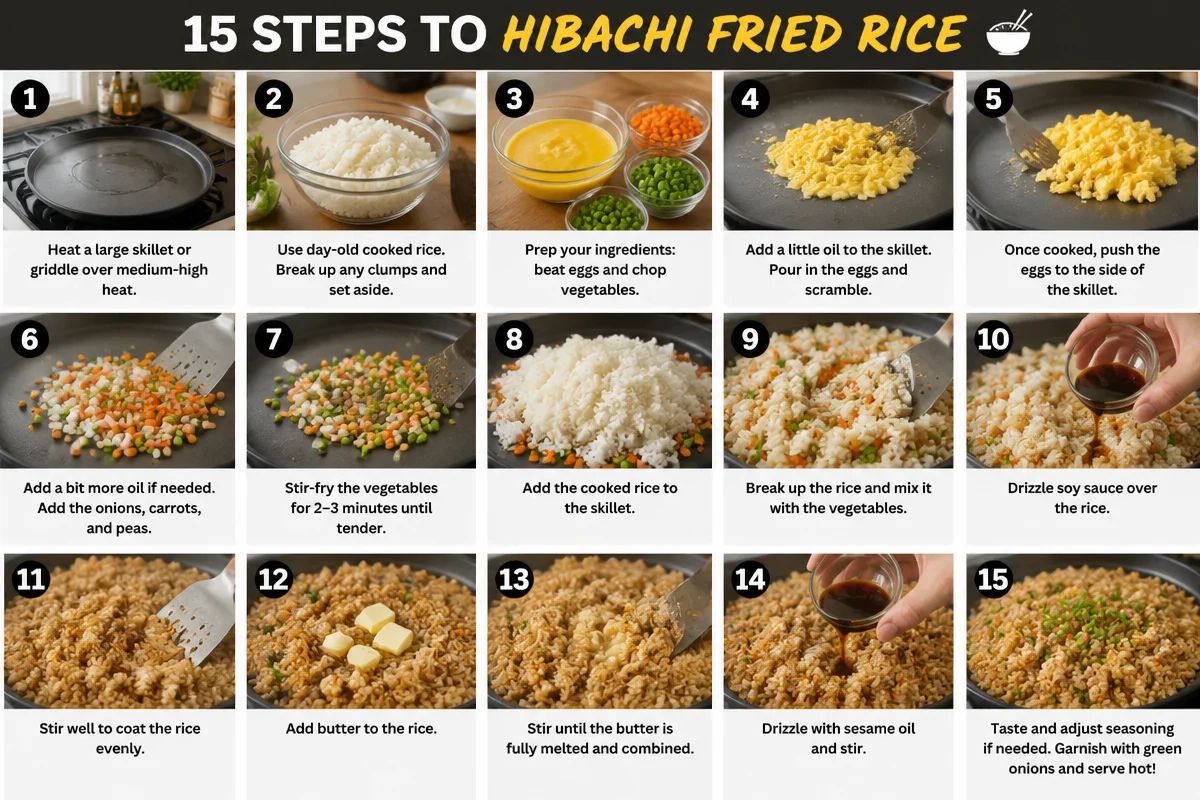
This is the part where things get fun. The whole recipe moves fast once the pan is hot, so I like to have everything chopped and ready. Think of it like setting yourself up for an easy win.
Cook it hot and fast
Grab a large skillet or wok and heat it over medium high heat. When it feels properly hot, add the oil and 1 tablespoon of butter. Once the butter melts, add onion (if using) and cook for about 1 to 2 minutes. Add garlic and stir for about 15 seconds, just until it smells amazing.
Push the onion and garlic to one side. Crack in the eggs on the empty side and scramble them right in the pan. When they are mostly set, mix them into the rest.
Now add the peas and carrots. Stir and let them warm through for another minute or so. Then add your cold rice. Spread it out a bit and let it sit for 20 to 30 seconds before you stir. That little pause helps it toast instead of turning mushy.
Add the rest of the butter (yes, more butter), then drizzle in soy sauce. Stir well, and keep frying for 3 to 5 minutes. You want the rice hot, a little glossy, and lightly browned in spots. Turn off the heat and add sesame oil if you are using it. Taste and adjust with a bit more soy sauce, salt, or pepper.
If you are adding cooked meat, toss it in at the end so it heats up without drying out. Finish with green onions on top.
That is it. You just made a restaurant style **hibachi fried rice recipe** without leaving your kitchen.
Common Mistakes to Avoid
I have made every single mistake on this list, so this is me saving you from a few disappointing pans of rice.
Mistake 1: Using hot, fresh rice.
It usually turns gummy. Cool it down first, even if it is just a quick chill.
Mistake 2: Not heating the pan enough.
If the pan is not hot, the rice steams. You want that sizzle when ingredients hit the skillet.
Mistake 3: Adding too much soy sauce too early.
Start with a couple tablespoons, then adjust. Too much turns everything dark and overly salty, and it can make the rice wet.
Mistake 4: Overcrowding the pan.
If you double the batch, consider cooking in two rounds. Crowded rice does not brown well.
Mistake 5: Skipping butter because you are trying to be “good.”
Look, you can reduce it, but butter is a big part of the hibachi flavor. Even a small amount makes a difference.
Once you avoid these, the whole **hibachi fried rice recipe** thing becomes almost effortless, like a weeknight superpower.
Variations and Add-ins for Hibachi Fried Rice
This is where you can make it your own, based on what is in your fridge. I love recipes like this because they are forgiving. You can keep it classic, or you can clean out your produce drawer and feel weirdly proud of yourself.
Easy add ins that work every time
Protein ideas: cooked chicken, shrimp, diced steak, tofu, or even leftover pork. For shrimp, I like to quickly sauté it first, set it aside, then add it back at the end.
Veggie ideas: mushrooms, zucchini, corn, chopped broccoli, bell pepper, or shredded cabbage. Just chop small so it cooks quickly.
Flavor boosts: a tiny pinch of sugar (balances soy sauce), a spoon of **garlic butter**, a splash of rice vinegar, or extra sesame oil. If you like heat, add a little sriracha or chili flakes.
If you are trying to match that steakhouse taste, serve it with yum yum sauce, grilled veggies, or simple pan seared chicken. This also makes a great side for salmon or a quick stir fry.
And yes, this **hibachi fried rice recipe** is totally meal prep friendly. It reheats well in a pan with a tiny bit of butter or oil. Microwave works too, but the skillet brings back that nice texture.
Common Questions
Can I use brown rice?
Yep. It will be a little chewier and nuttier, but still really good. Just make sure it is cold before frying.
What makes it taste like hibachi restaurant rice?
Hot pan, butter, soy sauce, and a tiny bit of sesame oil. That combo gets you very close without any fancy tools.
How do I keep fried rice from getting soggy?
Use cold rice, do not overcrowd the pan, and do not drown it in soy sauce. Let it sit for short moments so it can brown.
Can I make it without eggs?
Absolutely. Skip the eggs and add extra veggies or protein. You can also crumble in tofu for a similar texture.
How long will leftovers last?
In the fridge, about 3 to 4 days in a sealed container. Reheat until steaming hot for best results.
A cozy dinner you will want on repeat
If you take anything from this post, let it be this: cold rice and a hot pan are the real magic. Keep your ingredients simple, do not be shy with a little butter, and taste as you go. Once you make it once, you will start craving it on busy nights because it is fast and genuinely satisfying. Give this **hibachi fried rice recipe** a try, and if you add your own twist, I bet it will become one of your regular meals.